Lumosity Alternatives: 6 Brain Training Apps Worth Trying
Lumosity’s free version is limited and Premium isn’t cheap. Here are six alternatives, what each one is actually good at, and what they cost on the US App Store right now.
Updated 2026-10-07. Ratings and prices from the US App Store and Google Play.
Why people look for a Lumosity alternative
Lumosity is the best-known brain training app there is. It has 40+ games, a free 10-minute “Fit Test” to set a baseline, and a 4.7-star rating from about 130,000 reviews on the US App Store. So why do people go looking for something else? From what we see in searches and reviews, it usually comes down to one of four things:
- The free version is thin. A free account gets a short daily selection rather than the full library. Reviewers, PCWorld among them, describe it as three games a day, and you don’t pick which three. Personalized workouts and detailed insights are part of Premium.
- The price. The US App Store lists Lumosity Premium options from $11.99 up to $89.00 (App Store, US, Oct 2026). Which one you’re offered depends on the plan and any promotion running.
- They want different games. Lumosity leans toward abstract puzzles. Some people want reading and writing practice, a calmer pace, or just a short, fixed set they can finish.
- They’ve read about the FTC case and want to know which apps make claims they can back up. More on that below.
Disclosure
We make Memo, one of the apps on this list. We’ve tried to be straight about where it fits and where it doesn’t. Ratings and prices for every app were checked on the US App Store in October 2026.
Lumosity alternatives at a glance
| App | Best for | Free option | Price (App Store, US, Oct 2026) | Rating |
|---|---|---|---|---|
| Memo | A short fixed daily set | Browser versions of every game; 2 games free in app | $4.99/mo or $29.99/yr, 7-day trial | 5.0 (3 ratings) |
| Elevate | Reading, writing, math | Basic free version + 7-day trial | $9.99/mo or $39.99/yr | 4.8 (544k) |
| Peak | Variety, quick sessions | Basic free version | Pro plans $2.99–$34.99 | 4.7 (146k) |
| BrainHQ | Strongest research base | One free exercise a day | $13.99/mo or $94.99/yr | 4.6 (22k) |
| MindPal | Lifetime option | Free to use, Pro upgrade | $7.99/mo, $39.99/yr, $99.99 lifetime | 4.7 (86k) |
| Impulse | Huge game library | 3-day trial only | Weekly from $6.99; lifetime $99.99 | 4.7 (850k) |
1. Memo: five minutes, eight games, done
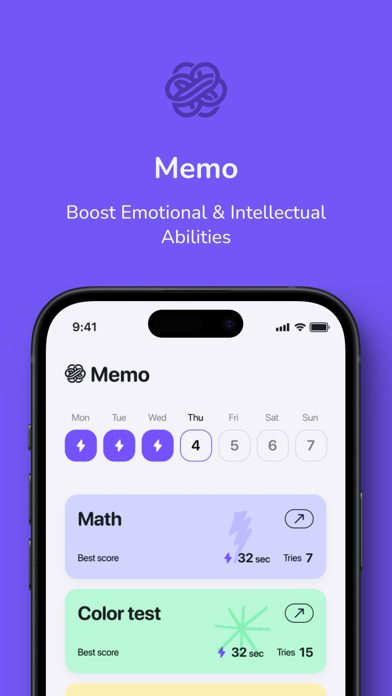
Memo is the opposite of a 40-game library. It has eight short games: the Chimp Test for visual working memory, a Stroop test called Brain Speed, a 16-word word recall test, a memory matching game, mental math, a geometry puzzle where you find the missing angle, guided box breathing and a Do Nothing timer. A round takes a minute or two.
The app saves your best score in each game every day and charts it against your first try, so you see your own trend rather than a single composite “brain score.” If you want a free Lumosity alternative to try right now, every game has a free version on this site you can play in the browser. On price: Breathing and Do Nothing are free. Premium unlocks the other six games for $4.99 a month or $29.99 a year, after a 7-day free trial.
Good
- Free browser versions of every game on this site, no sign-up
- A fixed set you can finish in about five minutes
- Progress chart against your own first try, plus a leaderboard
- Breathing and Do Nothing are free in the app
Not so good
- Brand new: 3 App Store ratings so far
- Only 8 games, and no adaptive difficulty
- No language, reading or writing games
- No research of its own behind it
2. Elevate: if you want words and numbers, not shapes
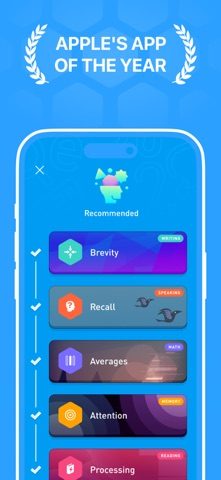
Elevate is the closest like-for-like swap for Lumosity, but it trains different things. The games are about vocabulary, grammar, reading speed, and the math you actually do, like tips, discounts and splitting a bill. It has a 4.8 rating from about 544,000 reviews. There’s a 7-day trial and a basic free version. Per its own store listing, you reach the free version by tapping the X in the upper-left corner after you sign up. Elevate’s developer renamed itself The Mind Company in October 2025, and it also makes the Balance meditation app. More options in our Elevate alternatives guide.
Good
- 40+ games aimed at reading, writing, speaking and everyday math
- Real basic free version, not just a trial
- Adaptive difficulty and a workout calendar
Not so good
- Less focus on memory and attention than Lumosity
- Best features sit behind the subscription
3. Peak: the most Lumosity-like library
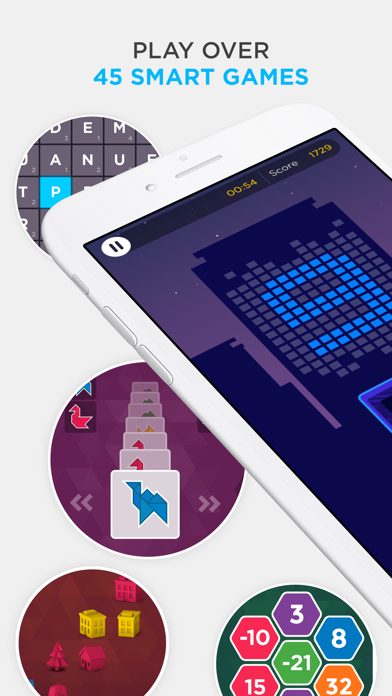
If you like Lumosity’s style and just want a cheaper or different library, Peak is the obvious pick. It has 45+ games, a 4.7 rating from about 146,000 reviews, and Pro plans on the App Store between $2.99 and $34.99 depending on the offer. Peak was built in London by Brainbow. Hachette Livre bought a majority stake in 2016, and the app has since moved to a games publisher. That hasn’t hurt the ratings, but it’s worth knowing who you’re subscribing to. See Peak alternatives for more.
Good
- 45+ games across memory, attention, problem solving, language and more
- “Coffee Break” workouts under five minutes
- Basic version is free
Not so good
- Ownership has changed several times since launch
- Many offers and plan prices in the store; check what you’re buying
4. BrainHQ: if research matters most to you
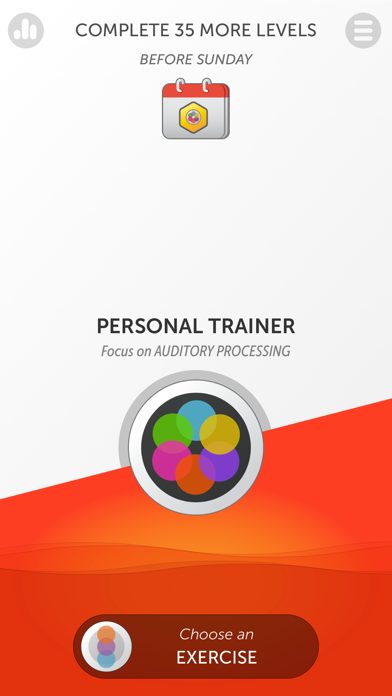
BrainHQ, from Posit Science, is the pick when the science is what you care about. Its speed training comes from the same line of research as the ACTIVE trial, which we cover in do brain training apps work?. It costs $13.99 a month or $94.99 a year on the App Store. You get one free exercise a day without paying. It’s less fun than Lumosity, and it doesn’t try to be fun. Wondering if it’s worth the price? See BrainHQ alternatives.
Good
- The most published research of any consumer brain training program
- Its speed training comes from the long-running ACTIVE study
- A free exercise every day
Not so good
- Looks and feels more like a lab than a game
- Android app is weakly rated (2.9 on Google Play)
- Priciest yearly plan here
5. MindPal: a lifetime option
MindPal is a newer app that has quietly built a big following: 4.7 stars from about 86,000 reviews. Its store listing spells out the prices: $7.99 a month, $39.99 a year or $99.99 lifetime. If what bothers you about Lumosity is the endless renewing, a one-off lifetime plan is the main reason to look here.
Good
- 40 games across seven skills, including language
- Published prices, including a $99.99 lifetime plan
- Free to use, with Pro as an upgrade
Not so good
- Similar approach to Lumosity, so similar strengths and limits
- Less known than the big names
6. Impulse: the biggest library, with weekly billing
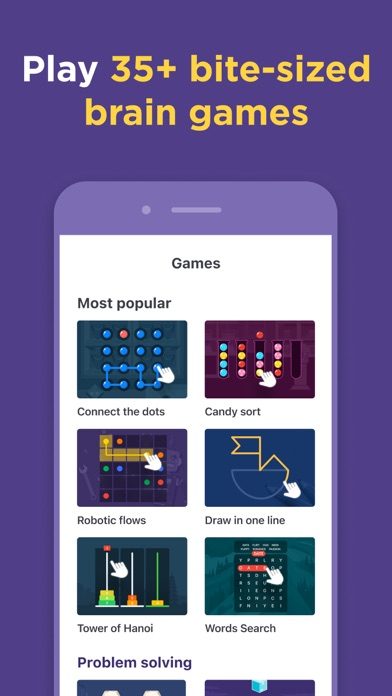
Impulse has more App Store ratings than any other app here. Its game grid is long and the games are quick. There’s no lasting free version, though: you get a 3-day trial, then weekly plans listed from $6.99, with longer plans and a $99.99 lifetime option. Our Impulse alternatives guide covers how to cancel if a trial turned into a charge.
Good
- Huge user base: 850k App Store ratings
- 35+ short games plus tests and quizzes
- Lifetime plan available
Not so good
- No free tier, just a 3-day trial
- Weekly plans add up fast
- Includes “IQ” and personality tests we wouldn’t read much into
Lumosity’s history: the FTC case and LumosityRx
In January 2016, Lumos Labs agreed to pay $2 million to settle Federal Trade Commission charges. The FTC said Lumosity had claimed, without the science to back it up, that its games could improve performance at work and school and could delay age-related decline, including dementia and Alzheimer’s. A $50 million judgment was suspended because of the company’s finances. The settlement also required Lumosity to tell earlier subscribers about the case and give them a simple way to cancel (FTC press release).
That was ten years ago, and Lumosity’s marketing is much more careful now. In December 2025 it got FDA clearance for LumosityRx, a separate prescription app for adults aged 22 to 55 with ADHD. It uses 13 of its games and was tested in a sham-controlled trial of more than 500 people (Patient Care). Two caveats: that clearance covers the prescription product, not the consumer app, and it doesn’t mean other brain games do the same. No app on this list, Memo included, is a treatment for anything.
How to choose
- You want everything Lumosity has, for less: try Peak or MindPal.
- You care about vocabulary and writing: Elevate, without question. Memo has no language games.
- You want the strongest evidence base: BrainHQ.
- You want a short routine you’ll actually keep: Memo. Start with the free browser versions on our brain games page.
- Whatever you pick: use the free tier or trial for a week before you pay, and put a reminder in your calendar the day before any trial ends.
Questions people ask
Is there a free version of Lumosity?
Yes, but it’s limited. A free account gets the Fit Test and a small daily selection of games (reviewers describe it as three a day), without personalized workouts or detailed insights. Premium unlocks the full library of 40+ games.
What is the best free alternative to Lumosity?
For a real free tier inside an app, Elevate and Peak both have basic free versions, and BrainHQ gives you one free exercise a day. If you just want to play, Memo’s games all have free browser versions on startwithmemo.com with no sign-up.
Why did Lumosity pay the FTC $2 million?
In January 2016 the FTC said Lumosity had advertised, without adequate evidence, that its games could improve performance at work and school and delay cognitive decline, dementia and Alzheimer’s. Lumos Labs settled for $2 million, with a $50 million judgment suspended.
Is Lumosity better than Elevate?
They train different things. Lumosity is mostly abstract memory, attention and problem-solving games. Elevate focuses on reading, writing, speaking and everyday math. See our Lumosity vs Elevate comparison for the details.
Do any Lumosity alternatives have stronger evidence?
BrainHQ has the most published research behind it, including speed training from the ACTIVE study. Even so, the overall evidence that brain games improve everyday life is limited. Expect to get better at the games, and treat anything beyond that as a bonus.
Keep reading
- Lumosity vs Elevate: Which Brain Training App Should You Pick?
- The Best Brain Training Apps in 2026, Honestly Compared
- Do Brain Training Apps Actually Work? What the Evidence Says
- Chimp TestRemember where the numbers were, then tap them in order.
- Stroop testName the ink, not the word — then the rule flips.
- Word recall testStudy 16 words for a minute, then type back all you remember.